Long before maps were filled with roads, people needed a way to move from one place to another without getting lost. The solution was simple: pick a few known points and move from one to the next. That idea became waypoint navigation, a method that still guides ships, aircraft, drones and even everyday apps.
Early Navigators and Fixed Points
Sailors of the past rarely tried to sail a straight line across the ocean. They worked with what they could see and what they could trust. A headland, a burning lighthouse, a tall island or a particular star rising over the horizon became a reference. The crew would sail toward that reference, confirm its position, then choose the next one further ahead. This turned a frightening open sea into a series of short legs. The method saved ships from drifting too far off course and gave captains a clear way to explain the plan to the crew.
The same thinking was used on deserts and mountain trails. Caravans could not carry detailed maps, but they knew wells, passes and trees that stood out from miles away. Traders memorized the order of these points and taught them to the next generation. When one point was missed, the travelers could stop, wait for better conditions and start again from a known place. Over centuries, the habit of linking known points became a common language for movement without modern instruments.
From Sea Charts to Air Routes
When aviation grew in the early twentieth century, pilots faced the same problem as sailors, only at higher speed and with less room for error. Radio beacons and visual landmarks were placed along common routes. A pilot would leave the ground, fly toward the first beacon, then switch to the next. Flight plans were written as a list of points with altitude and speed. Air traffic controllers used those lists to keep aircraft separated in busy skies. The system made long flights possible and reliable.
Shipping kept the old habit alive with updated charts. Lighthouses, buoys and radar reflectors marked channels through dangerous waters. A captain would plot a course by joining points on the chart and then follow them in sequence at sea. Port authorities published recommended tracks that ships could follow to avoid shallow areas and busy lanes. Even when compasses and clocks improved, the basic idea stayed the same: move from a sure point to the next sure point.
How Machines Read a Chain of Points
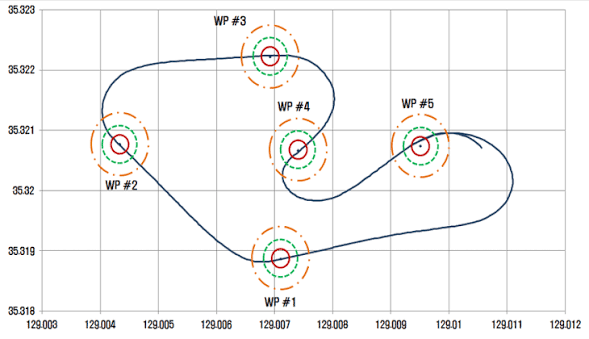
With satellite positioning, waypoint navigation became invisible and automatic. A receiver can know its position within a few meters and compare it with a stored list of coordinates. The device calculates the bearing and distance to the next point and guides the vehicle by small corrections. Ships now follow electronic tracks, drones fly surveys by connecting points in the air, and autonomous cars use lane points to stay centered. The logic is old, but the execution is fast and precise.
The system also adds safety. If wind, current or traffic pushes a vehicle off the planned line, the software can warn the operator or adjust the route to the next reachable point. Points can be changed in real time, so a new safe harbor or a detour can be added without redrawing the whole plan. Pilots and captains still review the list before departure, because understanding the sequence remains important even when the machine does most of the work.
Waypoints in Daily Life
Today the idea lives in tools most people use every day. Mobile maps guide drivers from home to work by breaking the trip into turns and intersections that act as waypoints. Fitness apps record a run as a series of points, then show distance, pace and elevation. Delivery services plan routes that link pickup and drop locations in the most efficient order. The experience feels effortless because the underlying method is simple and well tested.
The value of waypoint navigation is its balance between flexibility and certainty. The whole journey is divided into small, checkable steps. Each step can be verified, corrected and explained. From ancient sea routes to modern robot deliveries, the principle has not changed. Choose a known point, move toward it, then choose the next. That steady step by step approach continues to keep people and machines on course across the world.